What Is YouTube Multi-Language Audio?
Understand how YouTube multi-language audio works, who can use it, how viewers choose a track, and how it differs from automatic dubbing.
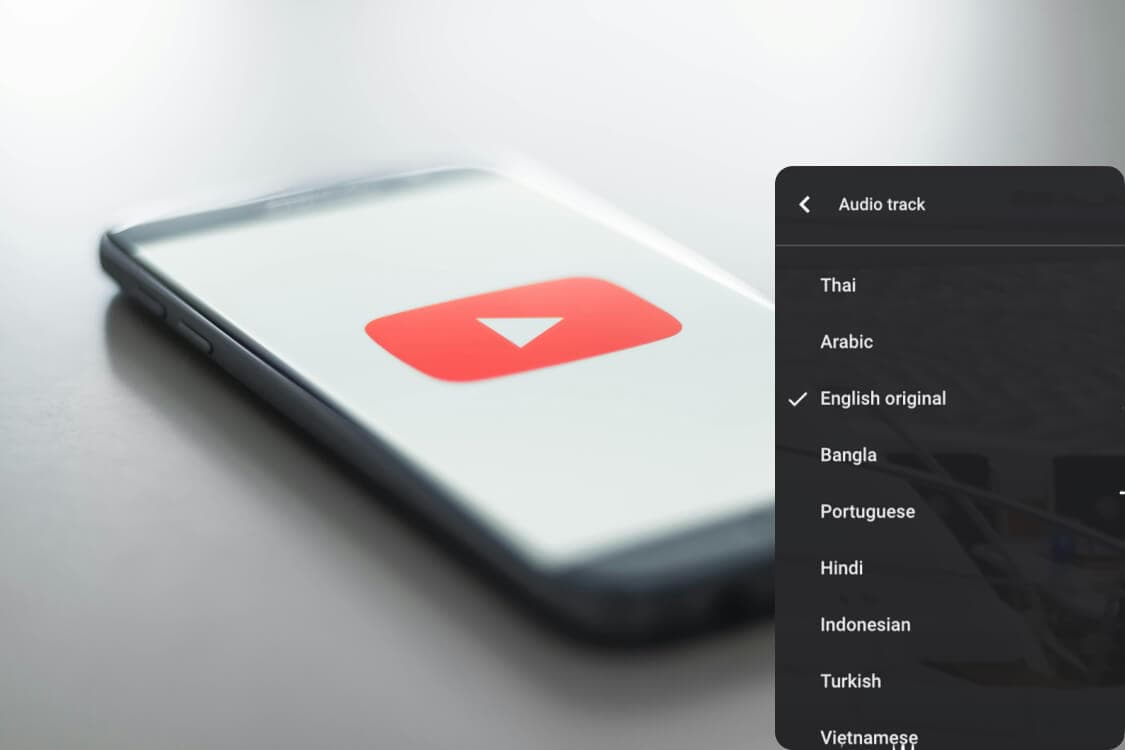
YouTube multi-language audio lets a creator attach several audio tracks to one video or Short. A viewer can hear the video in an available language without opening a separate channel or finding a separate upload.
The feature is useful for creators who want one video page, one set of comments, and one analytics record while serving viewers in several languages.
How it works for viewers
When a video has more than one audio track, YouTube may select a track based on the viewer's language preferences and watch history. The viewer can change it:
- Open the video settings.
- Select Audio track.
- Choose another available language.
The original audio remains available. YouTube explains the current viewer controls in its preferred-language guide.
How it works for creators
Creators with access can add a dubbed audio file to a new or existing video in YouTube Studio on a computer.
The current path is:
- Open Languages in YouTube Studio.
- Select a video.
- Select Add Language.
- Next to Dub, select Add.
- Upload an audio-only file that is roughly the same length as the video.
- Publish the track.
YouTube says access is still expanding and may depend on channel eligibility and Advanced features. Check your own Studio account before planning a large project. The official instructions are in YouTube's multi-language features guide.
Multi-language audio is not automatic dubbing
The names are easy to confuse.
Multi-language audio is the system for attaching additional audio tracks that you provide.
Automatic dubbing is YouTube's system for generating translated audio tracks for eligible creators and videos.
You can use a reviewed audio track created by a translator, voice actor, or AI dubbing tool with multi-language audio. If an automatic dub already exists for the same language, YouTube says you must remove that automatic dub before uploading your own version.
What else can be localized?
Audio is only one part of the viewer experience. YouTube also supports:
- Translated titles
- Translated descriptions
- Subtitle and caption tracks
- Localized thumbnails for eligible long-form videos
Translated titles and descriptions can help viewers find a video using searches in their language. The wording should match the translated audio rather than the source metadata alone.
Why use one video instead of separate channels?
Multi-language audio keeps:
- Views on one video
- Comments in one place
- A single video URL
- One primary set of analytics
- Audio options under the same player
Separate language channels can still make sense when each audience needs different presenters, offers, upload schedules, community posts, or editorial choices.
Use one video when the underlying content is the same and the main change is language. Use separate channels when the market needs a separate content program.
Which videos should you dub first?
Start with videos that already prove their value:
- Evergreen tutorials
- Product demonstrations
- Popular course lessons
- Frequently shared explainers
- Videos that receive comments in another language
- Videos watched in countries where the source language is not dominant
Avoid starting with a large back catalog. Select a small group, publish one or two target languages, and check the results.
YouTube recommends reviewing views and watch time by audio language. That data can show whether a language deserves more videos.
How to prepare a good audio track
The target track should:
- Be roughly the same length as the source video
- Use the correct target language
- Match the meaning of the original
- Keep names and brand terms consistent
- Preserve important pauses and scene changes
- Include every speaker
- Use music and effects you have permission to publish
If you use voice cloning, get permission from the people represented by the voices. Review voice-cloning consent for video before publishing.
Should you add subtitles too?
Yes, when possible. Dubbed audio and subtitles solve different problems.
Subtitles help:
- Deaf and hard-of-hearing viewers
- Viewers watching without sound
- Reviewers checking exact wording
- Viewers learning the target language
- People who need to confirm names or technical terms
Add subtitles in the same language as each important audio track. Check them against the final audio, not an earlier translation draft.
What about automatic dubbing?
YouTube's automatic dubbing documentation says generated dubs can contain errors involving names, accents, dialects, idioms, jargon, pronunciation, and background noise. Creators can choose review settings before publication, but cannot directly edit an automatic dub.
Automatic dubbing can be useful for testing demand or covering lower-risk videos. A reviewed uploaded track is a better fit when the wording, voice, or timing must be controlled closely.
A simple decision rule
Use multi-language audio when:
- You want to keep one video URL.
- The content is useful in another language.
- You can prepare and review a complete audio track.
- The same visual edit works for every audience.
Use separate videos or channels when:
- The visuals need regional changes.
- The offer, presenter, or call to action changes.
- Each market has a separate publishing schedule.
- Local teams need control over comments and community posts.
For the upload steps, see how to upload multi-language videos on YouTube. For the full production process, use the YouTube multi-language audio workflow.
- Authors

- Written by:
- Chao Wu
- Title
- Founder of Dub AI
Dub AI
Translate and dub videos easily using AI. Your first minute is free.
Start freeGet 60 credits free. Dub up to 1 minute. No credit card needed.